Text Size:
Personal Insurance
Flood Insurance 101
Don't let your dreams get washed away!

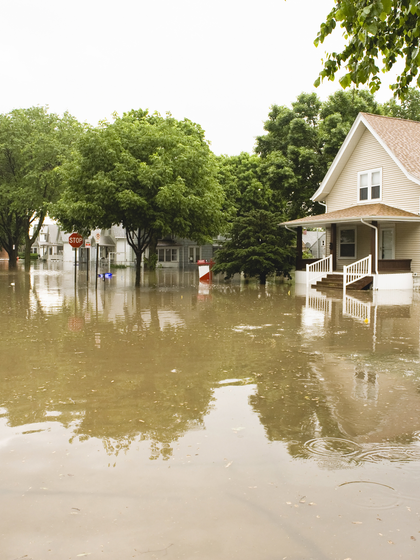
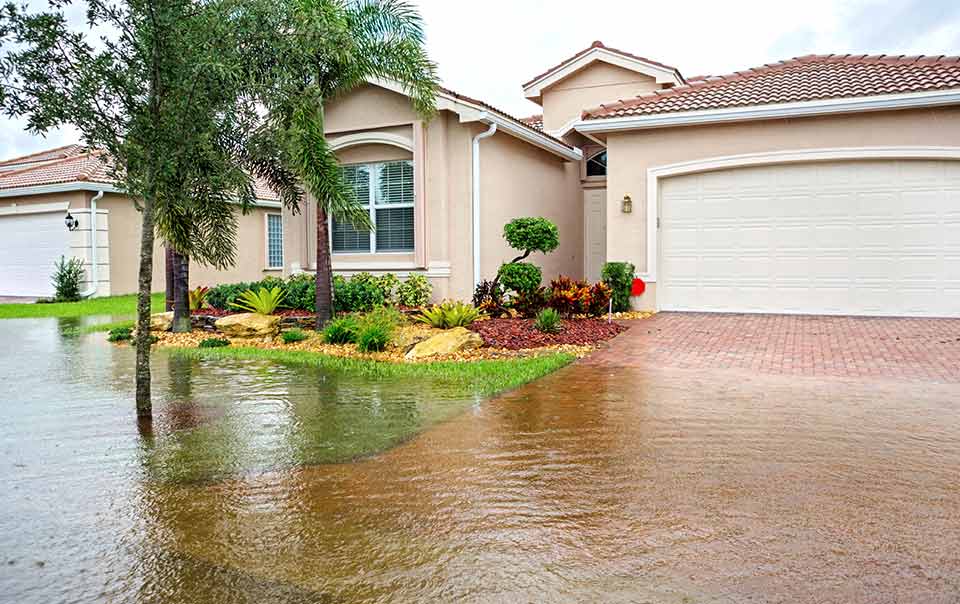
Let's say the river near your home overflows its banks after an excessive rainfall, causing severe damage to your home and its contents. Your homeowners insurance takes care of all related costs, yes or no? Answer: Not at all! Why? Because damages caused by floods are specifically excluded from all homeowners policies. You need to have a separate flood insurance policy in order to be covered.

Flood insurance is a very necessary coverage for those who live in flood prone areas, and even for those in low-to-moderate risk areas. However, it is important to understand that while homeowners insurance is designed to bring your home and its contents back to the same condition it was in before a loss, flood insurance is only meant to get you back on your feet. To understand more about how this coverage operates and what it covers, please review the following topics:


Background information
In the not too distant past, flood insurance was unavailable because it was too costly for private insurers to offer. The national response to flood disasters was generally limited to constructing flood control works such as dams, levees, sea walls, etc. If you were a flood victim, the only recourse you had was the remote possibility of disaster relief.

In 1968, Congress established the National Flood Insurance Program (NFIP) with two objectives in mind. The first goal was to give property owners the opportunity to purchase insurance protection for flood losses. The second goal was to encourage communities to implement and enforce measures to reduce future flood risks in Special Flood Hazard Areas (SFHAs).

Today, individuals who reside in communities that make the effort to reduce flood risks can receive insurance as a financial protection against flood losses. And the government has been able to lower its financial risk by having local governments take responsibility and steps to limit the chances (and the resulting devastation) of floods.

Top


How flood insurance helps your community
By limiting development in areas of high flood risk and encouraging construction practices that help reduce the impact on structural damages, a community can protect its citizens against the high costs associated with flood disasters. The entire community benefits from effective flood area management: the risk of loss is lessened, the impact on property is decreased and property owners can purchase much needed insurance protection.

Top


What if my community chooses not to participate in the National Flood Insurance Program?
Flood insurance is not available to residents of communities that don't participate. Also, if a presidentially declared disaster due to flooding occurs in a non-participating community, no federal financial assistance can be provided for the permanent repair or reconstruction of insurable buildings in Special Flood Hazard Areas (SFHAs). Your local insurance agent, Travelers representative, or community officials can inform you whether or not your community is participating in the NFIP.

Top


What is a flood?
"Flood" is defined as a general and temporary condition of partial or complete inundation of normally dry land areas from:

  • overflow of inland or tidal waters,
  • the unusual and rapid accumulation or runoff of surface waters from any source, or
  • mudflows caused by flooding.

Top


Do I need flood insurance?
Don't let the fact that you don't own beach-front property lull you into a sense of false security. The fact is that beach-front structures only account for 3% of all flood losses. Homeowners who live in high hazard flood areas should seriously contemplate purchasing flood insurance... especially when you consider that they have a 26% chance of having a flood loss over the course of a 30 year mortgage! Often, flood insurance is required as a condition of granting a mortgage if your lender determines that your home is in a high hazard flood area.

Even if you live in a low hazard flood area your property may still be at risk. Each year, about 25% of all flood claims paid are for property located outside high-risk areas. The good news is that there is a Preferred Risk program that offers substantial premium discounts for homes located in low hazard areas.

If you think your home is at risk, you might want to consider contacting your local agent or Travelers representative. Or you can check out special flood insurance maps published by FEMA (the Federal Emergency Management Agency). These maps (which indicate a community's flood hazard areas and the associated degree of risk) are usually kept on file at your local town hall or county building and are available for your review.

Top


How can I get flood insurance?
About 85 private insurance companies participate in selling and servicing the National Flood Insurance Program for the federal government. Your local insurance agent or Travelers representative should be able to provide you with all the necessary information.

Top


Waiting period rules
Don't wait until the water's rising to decide that you need Flood Insurance! There is a standard 30-day waiting period for new applications and endorsements to increase coverage. The effective date of the new policy will be 12:01 a.m. local time on the 30th calendar day following the application and premium payment date. The exception is for insurance purchased as a condition for a mortgage loan. In that case, the flood insurance is effective on the date of the closing.

Top


Coverage availability/limits
Flood insurance is catastrophic insurance, which means there are limits on how much insurance will be provided. For example, residential buildings can only receive up to $250,000 in coverage, non-residential buildings only $500,000. Contents within the home are also limited up to $100,000 for residential ($500,000 for non-residential) locations.

Top


What's covered?
Direct physical losses by flood are covered. Also covered are losses resulting from flood-related erosion caused by excessive waters accompanied by a severe storm, flash flood, abnormal tidal surge or the like, which result in flooding. Damages due to mudflows, if caused by flooding, are also covered.

Coverage is provided for flood damage to the building itself. This includes foundation elements, as well as posts, pilings, piers or other support systems for elevated buildings. Coverage is excluded for:

  • Most buildings located entirely over water (like boat houses),
  • Structures other than buildings (such as fences, retaining walls, swimming pools, underground structures), and
  • Items like walkways, decks, driveways and patios located outside the building.

Coverage is also available on an actual cash value basis for the contents (your personal possessions) located inside the building. However, it's very important that you know that coverage on valuable items (such as artwork, rare books, jewelry and furs) and personal property used in business is limited to only $2500. (A Valuable Items Policy will protect your most treasured possessions from many perils, including floods. You might want to contact your local agent or Travelers representative to learn more about this very important protection.).

Remember, this section is not intended to be a complete description of coverage. Your policy, independent agent, or Travelers representative can provide you with complete provisions.

Top


Coverage for basements and enclosed areas beneath the lowest floor.
You need to be aware that flood insurance only provides limited coverage for these areas. Coverage is available for equipment necessary to the habitability of the building such as utility connections, sump pumps, well water tanks and pumps, fuel or water tanks, furnaces, clothes washers and dryers, food freezers and air conditioners. Clean up expenses are also covered. Likewise, basement dry walls (unpainted), sheet rock walls (including fiberglass insulation) and ceilings are covered.

However, finished structural elements (such as paneling and linoleum) and contents (such as rugs and furniture) in basements and enclosures are not covered.

Top


Replacement cost versus actual cash value
Here's an extremely important point. Replacement cost coverage (which pays to replace or restore structure items) is only offered on a limited basis...and only for a single-family dwelling that is your principal residence. To receive replacement cost coverage on the structure, you must be insured for at least 80% of the building's replacement cost at the time of the loss or the maximum amount of coverage available, whichever is less.

Contents losses are always adjusted on an actual cash value basis. That means that you only receive what the item was worth as of day of the loss. For example, if you bought a $300 color television two years ago and it was damaged in a flood, you might only receive about $50 for it, if that is what the equipment was worth on the day of the flood. Your building loss would also be handled this way unless you qualified for replacement cost coverage.

Remember, flood insurance is not meant to restore your home to its original condition, just to get you back on your feet! And, it's much better than having no coverage at all.

Top


Deductibles
A deductible is the amount you have to pay out of your own pocket before the insurance coverage kicks in. Standard flood deductibles are $500 and $750. Higher deductibles are available to reduce policy premiums. Please be aware that with flood insurance your deductible will be applied to both your building and its contents, even though they might be damaged by the same flood.

Top


More on floods
If you'd like even more information on floods, you might want to review:

Top

Top 10 Flood Insurance Questions

Here are the 10 most frequently asked questions about the National Flood Insurance Program (NFIP).

10. Can't I just wait until it starts raining to buy Flood Insurance coverage?
Not if you want to be covered. Under most circumstances you've got to wait 30 days from the time the premium and application are received to be covered. So you can buy the coverage when it starts raining, but it won't protect you until 30 days later. The only way to circumvent the 30-day waiting period is if your community has revised its flood map within the last year or this is your first purchase and it is required by a lending institution to close a loan.

9. Aren't the NFIP limits too low to matter?
Not anymore. The 1994 improvements to the National Flood Insurance Program bumped up the limits on single family residences to $250,000 for the structure and $100,000 for the structure's contents. Even commercial structures can be insured to a limit of $500,000 for the building and $500,000 for contents. Replacement cost coverage is available for structures on a limited basis for single-family dwellings that are primary residences.

8. I can't qualify for coverage because I'm not in the flood plain, right?
Wrong. Almost everyone in a participating community qualifies for coverage and almost every community participates in the program. Remember to set the policy limits to the full value of your structure and buy contents coverage too.

7. Isn't it too tough to sign up and not worth my time since I'm in a low to moderate risk area?
Today it is even easier for people in zones coded B, C, and X to secure coverage. And more than 25% of all NFIP flood claims come from these low to moderate risk areas.

6. Can I finance my purchase?
Sure, Travelers accepts all major credit cards.

5. Do I have to wait until a completed elevation certificate is issued to me?
No. With provisional rating, Travelers can make coverage available even before an elevation certificate is complete (required on homes built after December 31, 1974 in map zones coded A or V). So you won't need to delay closing on a loan or settlement of a property.

4. Is my basement covered?
NFIP policies have some coverage for basement elements: cleanup expense and items such as furnaces, water heaters, washers and dryers, air conditioners, freezers, utility connections, and pumps are included. Contents in a finished basement are excluded, as are a basement's finished walls, floors, and ceilings.

3. Can't I just hold out for federal disaster assistance?
Hardly. Federal disaster assistance is declared in less than half of all flooding incidents. Besides, the annual premium for a NFIP policy is less expensive than the interest on most federal disaster loans. The only real option is to get insured before the loss. Even if a federal grant or loan is awarded to you after a major flood, you'll probably be required to use part of the proceeds to purchase a NFIP policy.

2. Can I buy NFIP coverage through Travelers?
You bet. Travelers works with the Federal Emergency Management Agency (FEMA), the administrator of the NFIP so that we can make flood coverages available to our customers.

1. Doesn't my homeowners policy cover floods?
NO. Most major insurance companies (including Travelers) do not offer flood protection as part of their homeowners coverage. Catastrophic risks created by floods are just too costly and would raise homeowners premiums too high. The NFIP is the only way for homeowners to address the risk of flood.

Top

Myths and Facts about the NFIP

We'd like to take a few moments to correct some common misconceptions about the National Flood Insurance Program (NFIP).

MYTH: Flood insurance is not available in high risk areas
FACT:Almost anyone in NFIP participating communities can purchase flood insurance. In fact, this program was specifically created to help those in Special Flood Hazard Areas (SFHA) obtain coverage. Federally regulated lenders must require borrowers in SFHAs to buy flood insurance as a condition of their mortgage. One exception: residents of Coastal Barrier Resource System (CBRS) areas are not eligible for flood insurance. These residents make up much less than 1% of the US population.

MYTH: You can wait until the last minute to buy flood coverage.
FACT:Although you can buy coverage just prior to a flood, there is a 30 day waiting period after you have paid the premium before the policy becomes effective. Two exceptions to the waiting period are:

  • if the flood map for your community was revised in the last year, and
  • if your initial flood insurance purchase is required to close a loan. Otherwise you must wait for 30 days before coverage begins.

MYTH: My homeowners policy covers flood damage to my home and property.
FACT:Homeowners policies rarely, if ever, cover flooding as a cause of loss. The only way to protect your home from loss due to flood damage is federal flood insurance.

MYTH: Flood insurance is available only to homeowners.
FACT:Coverage is available to protect homes, condominiums, apartments, and commercial - nonresidential buildings.

MYTH: If your property has been flooded even once, you can't get flood insurance.
FACT:As long as your community participates in the NFIP, you are eligible to buy flood insurance, regardless of how many times your property has been flooded.

MYTH: I don't need flood insurance, I'm not in a high risk area.
FACT:Around 25% of NFIP's claims come from outside high risk flood areas. Substantial premium discounts exist for residents who live in low to moderate risk areas.

MYTH: No basement coverage is available on a flood policy.
FACT:Flood Insurance provides coverage for basement clean up and items used to service the building such as boilers, furnaces, hot water heaters, air conditioners, etc. Most contents and improvements to basements are not covered.

MYTH: Federal disaster assistance will pay for flood damage.
FACT:Less than 50% of all flooding incidents are declared federal disaster areas. The $400 average annual flood insurance premium is much less costly than is interest on a federal disaster loan. Furthermore, recipients of federal disaster loans or grants must purchase flood insurance to receive disaster relief in the future.

MYTH: The NFIP encourages coastal development.
FACT:One of NFIP's primary objectives is to guide development away from coastal or flood-prone areas. In addition, the Coastal Barrier Resources Act of 1982 (CBRA) relies on the NFIP to discourage building on fragile coastal areas covered by the CBRA.

MYTH: Federal flood insurance can only be purchased directly through the NFIP.
FACT:Federal flood insurance policies are sold through private insurance agents and companies and are backed by the full faith and credit of the United States of America. Travelers is proud to work with the NFIP in providing this essential form of coverage.

MYTH: NFIP insurance does not cover flooding from hurricanes or the overflow of rivers or tidal waters.
FACT:The NFIP definition of coverage does cover floods caused by hurricanes or overflow of rivers or tidal waters. However, two or more acres or two or more adjacent properties must be affected. The policy defines flooding as a general and temporary condition during which the surface of normally dry land is partially or completely inundated. The cause of flooding can be:

  • overflow of tidal waters or inland waters
  • runoff, such as from rainfall
  • mudflows caused by flooding
  • collapse of land along a body of water from erosion exceeding normal levels.

MYTH: Wind driven rain is considered flooding.
FACT:Damage by wind driven rain is not covered under the NFIP policies, but is usually covered under homeowners policies such as those offered by Travelers as a windstorm peril.

Top


Report Your Claim

Report your claim
directly; we'll get to
work immediately...
24 / 7 / 365!


800.252.4633

(800.CLAIM33)


For Boat/Yacht Claims

800.772.4482

For Flood Claims

800.505.0193