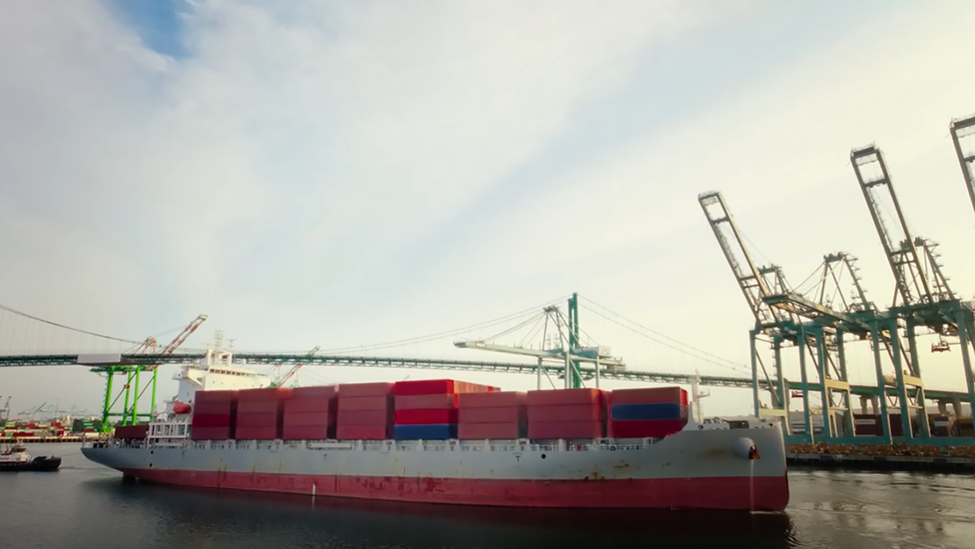
Global Expansion: Friendshoring Doesn't Always Mean Less Risk

Insight #1 | Insight #2 | Insight #3 | Insight #4 | Full Webinar Replay
Friendly shores can look like the safer bet, but a closer or more politically aligned market doesn't automatically carry less risk. Where a company operates is a strategic risk decision, not just a cost or speed calculation. Friendshoring or nearshoring carries a different risk profile: unfamiliar regulation, an untested claims environment, logistics nobody has stress tested and property that hasn't been through a loss cycle. Companies that treat the footprint question as a risk question from the start, alongside the cost and speed questions, keep more room to adjust once they're on the ground.
Tariffs, trade policy and shifting alliances have companies rethinking where they operate, and this webinar works that question through four lenses at once. Mutsa Makoni, Global Accounts Manager at Travelers UK, moderates the panel and adds a UK and European perspective. She's joined by Mariano Bustamante, AVP, Enterprise Risk Management at PriceSmart; Michael Lombardi, President, Global Solutions and the Lockton Global Partnership; and Darren Caspers, AVP, Field and Distribution for Global Accounts at Travelers. Together, an operator, a broker and a carrier examine the same expansion decision from operational, financial, regulatory and insurance angles, covering what changes from property and business interruption exposure to contract language, management liability and cyber.
Insight #1
Preparation Is the Only Variable You Control
Disruption arrives whether or not a company is ready for it, and the ones that look lucky afterward are usually the ones that did the work in advance. Mariano Bustamante, AVP, Enterprise Risk Management at PriceSmart, explains why a disruption playbook belongs in the plan before a new location opens, and what preparation looks like when the timing of the next event is the one thing nobody gets to control.
(DESCRIPTION)
Logo: Travelers. Text: Preparation is the only variable you control. Mariano Bustamante, AVP, Enterprise Risk Management, PriceSmart, sits before a photo of a warehouse floor.
(SPEECH)
MARIANO BUSTAMANTE: Being lucky is what happens when preparation meets opportunity. Resilience works in the same way. Companies that look lucky after a disruption are the ones that prepare with anticipation, and life will keep handing you both opportunities and disruptions. Preparation is the only variable that you can control. The action? Before you open, build the disruption playbook. So when the test comes, you will hopefully look very lucky too.
(DESCRIPTION)
Mariano smiles. Logo: Travelers. Text: Learn more at travelers dot com slash business dash insurance slash global. The Travelers Indemnity Company. All rights reserved. Travelers and the Travelers Umbrella logo are registered trademarks of The Travelers Indemnity Company in the U.S. and other countries.
Insight #2
Where Exposures Get Managed or Missed
A contract written for a domestic relationship does not always hold up once that relationship crosses a border. Michael Lombardi, President, Global Solutions and the Lockton Global Partnership at Lockton, walks through where an expansion tends to expose that gap, including indemnity language, insurance requirements, audit rights and jurisdiction clauses. He makes the case for handling workforce, sales and data questions as risk financing questions well before a claim raises them.
(DESCRIPTION)
Text: Travelers. Logo: A red umbrella. Where Exposures Get Managed or Missed. Michael Lombardi, President, Global Solutions and the Lockton Global Partnership, Lockton.
(SPEECH)
MICHAEL LOMBARDI: Lockton works with many clients like PriceSmart who are expanding internationally regularly. And where it really shows up is in contractual risk transfer. It's where the exposures get managed or, frankly, get missed. You have to look at indemnity. You have to look at insurance requirements. You have to look at audit rights and jurisdiction clauses written for a domestic relationship.
But how does that overlay and really fit the international one? We don't see ourselves just as brokers. We see ourselves as global risk advisors. And our job is to reframe the workforce, the sales and the data questions as risk financing questions before they ever become a question about a claim.
(DESCRIPTION)
Title: Travelers. Logo: A red Umbrella. Learn more at Travelers dot com slash business dash insurance slash global. The Travelers Indemnity Company. All rights reserved. Travelers and Travelers Umbrella logo are registered trademarks of the Travelers Indemnity Company in the U.S. and other countries.
Insight #3
Where the Risk Picture Shifts First
When production or distribution moves, property and supply chain exposures tend to move first. Darren Caspers, AVP, Field and Distribution for Global Accounts at Travelers, describes what changes with a new facility, new shipping routes and suppliers that have not been stress tested, why concentrating activity in a single location can raise severity if that site becomes a bottleneck, and how much the liability picture can vary from one country to the next.
(DESCRIPTION)
Title: Travelers. Logo: A red Umbrella. Where the Risk Picture Shifts First. Darren Caspers, AVP, Field and Distribution for Global Accounts, Travelers.
(SPEECH)
DARREN CASPERS: The most immediate shift shows up in the property and the supply chain -- new facilities with different construction and production characteristics, untested logistics, new shipping routes and new suppliers that have not been stress-tested. Business interruption exposure is directly correlated with that and can move quickly. Concentrating activity in one location raises severity if that site is a bottleneck in their operations.
I've talked a bit about property and business interruption, but depending on the operation, the liability could be the biggest risk change, good or bad. The litigiousness and legal environment vary from country to country, especially when comparing to the U.S.
(DESCRIPTION)
Title: Travelers. Logo: A red Umbrella. Learn more at Travelers dot com slash business dash insurance slash global. The Travelers Indemnity Company. All rights reserved. Travelers and Travelers Umbrella logo are registered trademarks of the Travelers Indemnity Company in the U.S. and other countries.
Insight #4
A Footprint Shift Is a Risk Event
A shift in footprint deserves the same risk attention as a shift in trade terms, and companies in the UK and Europe have already lived through one at scale. Mutsa Makoni, Global Accounts Manager at Travelers UK, draws on what she saw structuring multinational programs through Brexit and explains why the companies that brought risk and insurance advisors in early had more room to move.
(DESCRIPTION)
Logo: Travelers. Text: A footprint shift is a risk event. Mutsa Makoni, Global Accounts Manager, Travelers UK, speaks into a headset while seated in an office.
(SPEECH)
MUTSA MAKONI: The lesson that I think transfers directly to U.S. companies facing similar pressures today is a footprint shift is a risk and insurance event just as much as it is a trade event. The earlier you treat it that way, the earlier you bring your risk and insurance advisors into the conversation, the more room you have to adjust before the pressure arrives.
(DESCRIPTION)
Logo: Travelers. Text: Learn more at travelers dot com slash business dash insurance slash global. The Travelers Indemnity Company. All rights reserved. Travelers and the Travelers Umbrella logo are registered trademarks of The Travelers Indemnity Company in the U.S. and other countries.
Watch the Full Replay: Friend or Friction? Choosing Smart Markets for Global Expansion
The full webinar follows one question through four vantage points: what actually changes when a company starts operating somewhere new. Each of the four video insights above takes a piece of that. The replay shows how the pieces connect, where an operator, a broker and a carrier look at the same expansion and see different things, and what the sequence looks like when insurance and risk questions come early enough to shape a decision instead of documenting it. The panel draws on direct experience opening markets, placing multinational programs and underwriting global accounts, with examples that range from a retailer building out market by market to what a carrier sees across a book of business.
Watch and learn about:
- How friendshoring and nearshoring decisions change a company’s risk profile, and why a closer market is not automatically a simpler one.
- What a market-by-market assessment involves, from regulatory environment and workforce norms to property characteristics, the local supplier base and the claims environment.
- Where contract language written for a domestic relationship can fall short once the relationship crosses a border.
- How property, business interruption and liability exposures shift when production or distribution moves.
- Which exposures are easiest to overlook during an expansion, such as management liability and cyber, and why they deserve attention early.
- What the UK and European experience with a major footprint shift suggests for U.S. companies facing similar pressure now.
- When to bring insurance, legal and risk advisors into the planning, and what earlier involvement makes possible.
Navigate to key segments in the full webinar replay below:
- Setting the stage: Footprint decisions back on the table (0:00)
- The carrier’s view across markets (11:42)
- PriceSmart’s footprint and the market-by-market lesson (13:26)
- Sequencing risk and insurance into market entry (17:09)
- Risk picture changes when the footprint moves (18:19)
- Contractual risk transfer across borders (19:55)
- The exposures that get underweighted (26:13)
- The UK and European view: a footprint shift as a risk event (31:20)
- Closing takeaways (48:46)
(DESCRIPTION)
Text: Travelers. Friend or Friction? Choosing Smart Markets for Global Expansion.
Slide, Friend or Friction? Choosing Smart Markets for Global Expansion. August 18, 2026. A picture of three people in safety vests at a construction site. Mutsa Makoni appears in a video call at the top right-hand corner of the slideshow.
(SPEECH)
MUTSA MAKONI: Welcome, and thank you for joining us today. I'm Mutsa Makoni, the global accounts manager for Travelers UK, and I'll be moderating today's conversation.
(DESCRIPTION)
Slide, Moderator. Mutsa Makoni. Global Accounts Manager, Travelers UK. A picture of Mutsa.
(SPEECH)
Today's session is titled "Friend or Friction? Choosing Smart Markets for Global Expansion."
More companies are rethinking where they build, source and operate. As that footprint moves, the decision stops being about growth. It becomes an operational, financial, regulatory and insurance decision as well. And this is what we'll be walking through today. Let me introduce the people joining me.
(DESCRIPTION)
Slide, Panelists. Mariano Bustamante, AVP, Enterprise Risk Management. PriceSmart. Michael Lombardi, President, Global Solutions and Lockton Global Partnership. Lockton. Darren Caspers, AVP, Field and Distribution, Global Accounts. Travelers. Pictures of the three panelists.
(SPEECH)
We've got Mariano Bustamante as AVP of enterprise risk management at PriceSmart. PriceSmart runs membership warehouse clubs across Latin America and the Caribbean from a U.S. base. So Mariano brings the operator's view of running multimarket operations.
Michael Lombardi is president of global solutions at the Lockton Global Partnership at Lockton. Lockton is a global broker that advises companies on expansion and risk transfer, so Michael speaks to what that looks like for global clients. Darren Caspers is AVP of field and distribution for global accounts at Travelers. Travelers Global Accounts structures multinational insurance programs, which forms the carrier perspective Darren will be bringing to this discussion. Thank you all for making the time to be here.
(DESCRIPTION)
Slide, Important Note. This material does not amend, or otherwise affect, the provisions or coverages of any insurance policy or bond issued by Travelers. It is not a representation that coverage does or does not exist for any particular claim or loss under any such policy or bond. Coverage depends on the facts and circumstances involved in the claim or loss, all applicable policy or bond provisions, and any applicable law. Availability of coverage referenced in this material can depend on underwriting qualifications and state regulations. The information provided in this material is intended as informational and is not intended as, nor does it constitute, legal or professional advice or an endorsement or testimonial by Travelers for a particular product, service or company. Travelers does not warrant that adherence to, or compliance with, any recommendations, best practices or guidelines will result in a particular outcome. In no event will Travelers, or any of its subsidiaries or affiliates, be liable in tort or in contract to anyone who has access to or uses this information. Unless otherwise specified, no sponsorship, affiliation or endorsement relationship exists between Travelers and any entities referenced in this presentation. Copyright 2026 The Travelers Indemnity Company. Travelers and The Travelers Umbrella are registered trademarks of The Travelers Indemnity Company in the U.S. and other countries. All rights reserved.
(SPEECH)
Before we jump in, I just want to take a moment for our disclaimer. Today's session is being recorded. That recording and additional resources will be shared later. Please take a moment to review the disclaimer on your screen.
(DESCRIPTION)
Slide, Poll Question. As your organization looks at friendlier markets, where does the friction show up first? A, Finding the right local suppliers and partners. B, Local rules, compliance and workforce requirements. C, Logistics, distribution and getting goods where they need to be. D, We're still exploring and haven't hit the friction yet.
(SPEECH)
All right, so let's start with a quick poll to see where you're coming from. As your organization looks at friendlier markets, where does that friction come up first? Looking at the options on screen, friction may show up somewhere other than where companies initially expect it to. An expansion might be as a supply chain decision, but very quickly, operational, regulatory and workforce considerations can come into play.
I'll just give a moment for everyone else to respond.
OK, so it looks like local rules, compliance and workforce requirements is where many of you are feeling it first. Let's keep that in mind as we go.
(DESCRIPTION)
Slide, Q1. What do friendshoring and nearshoring mean, and why are they drawing so much attention right now? A picture of two men in a warehouse.
(SPEECH)
Before we kick off the discussion, I'll start off with some definitions, since these terms do get used quite loosely. So "friendshoring" means shifting, sourcing, production and operations towards markets seen as more economically, politically and operationally aligned.
(DESCRIPTION)
Slide, Friendshoring, nearshoring and reshoring are all responses to the same global shift -- and they turn where a company builds, sources and operates into a strategic risk decision.
(SPEECH)
"Nearshoring" means moving them closer to home, and reshoring brings them back entirely.
All three are part of a broader response to global political and economic realignment, and that realignment is changing where and how companies operate. That is why choosing where to build, source and operate has become a strategic decision. Aligning with nearby markets can support resilience, and they bring trade-offs that reward planning across operations, compliance, contracts and insurance.
Our focus today is what changes operationally, contractually and from a risk and insurance standpoint, when that footprint moves. Just to note, country selection and geopolitics sit outside our scope in this discussion. But here's the ground that we'll cover -- what's driving the move, and where a company is heading. We'll get to hear PriceSmart's own journey, how the risk profile changes, and the risks that get underestimated. We'll touch on supplier oversight and practical planning, the UK and EU lens, as well as insurance program design and claim readiness.
Let's start off with the business decision behind it. Michael, from where you sit, advising global companies, what is drawing so much attention now?
(DESCRIPTION)
Michael Lombardi appears on the video call.
(SPEECH)
MICHAEL LOMBARDI: Well, it's interesting. And thank you guys for the opportunity to speak with everyone today. I'm delighted to be here and to represent not just Lockton, but Travelers and the PriceSmart partnership. I would say the interest is grounded in real movement. It strikes me that, every time something bad happens in the world, the press is quick to say that globalization is coming to an end. But after more than 25 years of doing this, I can tell you that it's cyclical, and there's many, many changes that take place in the marketplace.
I think that, over the last few years, trade has been more resilient than expected. And as companies look to pivot their operations, they're looking for a plus-one. What other countries are of interest to them? Mexico, Vietnam, India, Thailand are all of interest. Imports in Mexico have grown 7% over the last couple years. Vietnam is up 32%. India is up 6%. Thailand is up 6%. And that means real contribution to GDP growth.
Mexico, as a matter of fact, was the United States' top trading partner in 2024, and their goods and services trade represented about $935 billion. So, for clients, I think this is a mix of both proximity to customers, trade alignment and resilience after these several years of supply chain shocks.
MUTSA MAKONI: That's a really great overview, Michael, and you've covered quite a lot of relevant points, which we'll build on today. Mariano -- from the operator's seat, does that match what you're seeing?
(DESCRIPTION)
Mariano Bustamante appears.
(SPEECH)
MARIANO BUSTAMANTE: What's up? It matches, but first of all, good morning and good afternoon to everyone, and thank you for the opportunity to be part of this discussion.
And from the operational perspective, I believe this starts as a business continuity and growth questions. Can companies serve customers across multiple jurisdictions reliably, source consistently and run dependable operations in each market? And the risk questions follow quickly. I believe a more aligned or closer market is not a simple one. Local rules, workforce, property and logistics all have to be understood, market by market.
MUTSA MAKONI: That's really interesting. Being closer doesn't necessarily mean simpler. OK. Darren, when a move like that lands on a carrier's desk, how do you start reading the risk?
(DESCRIPTION)
Darren Caspers appears.
(SPEECH)
DARREN CASPERS: Thank you, Mutsa. From a carrier's view, the risk conversation starts with what the move actually involves, operationally. Are there new facilities, new vendors, new countries or jurisdictions? They can all reshape property, business interruption and liability exposures. Consolidating into a single hub can lower one dependency while raising concentration risk. So disruption at that location carries more weight than before.
These are all things to consider when thinking about the insurance aspect of changing the global footprint.
MUTSA MAKONI: Well, thank you, Darren. I think that's a good setup for the bigger picture. Let's talk about why now, and where companies are actually going.
(DESCRIPTION)
Slide, Q2. What's really driving the shift in markets, and what makes a good place to operate? A picture of semitrucks in a parking lot next to train tracks.
(SPEECH)
Michael, you advise companies making this exact move. What's really driving it right now? And as companies decide where to grow, what regions are doing the most interest, and what actually makes a good market, a place to operate?
MICHAEL LOMBARDI: It's really interesting, Mutsa. And I mentioned a couple of the key markets early in my first statement, but I think companies are really trying to balance cost against resilience. The lowest-cost supply chain is rarely the most resilient one is what we're finding. And underneath it all is this global political and economic realignment.
(DESCRIPTION)
Slide, Resilience is reshaping where companies operate. Companies now weigh cost against resilience. The lowest-cost supply chain is rarely the most resilient. Realignment, proximity and resilience usually push at once. The center of gravity is shifting. For U.S. companies, the pull has moved toward the Americas, while Southeast Asia's supply chains consolidate and shorten. A workable market is rarely the headline. Trade alignment, infrastructure, workforce depth and supplier maturity decide whether a market can support the operation.
(SPEECH)
Trade policy and shifts are the most visible example, I think, for everybody in the audience today, but they also sit alongside customer proximity, supply resilience and incentives.
I think, for most clients, it's several of these at once, and not just one single cause. I think the center of gravity for many of our U.S. clients and many companies that we're interviewing today has really moved towards the Americas, with Mexico, Central America and the Caribbean featuring prominently. And Southeast Asia is also shifting as well. There's new investment in supply chains that are consolidating and getting shorter.
One great example I always like to share is we work with a OEM manufacturer of automotive parts. And we found, through analyzing their supply chain, that one accelerator has 11 different subsidiaries across five different countries that all manufacture the component part to then ultimately be installed in the end product. So I think proximity matters, but it's rarely the whole story. Trade alignment, infrastructure, workforce depth, regulatory familiarity and the maturity of the local supplier base all shape where the market can support the operation.
So really, a location can look attractive on logistics or cost, but still require real due diligence on local rules, supplier readiness and jurisdictional obligations.
MUTSA MAKONI: Thank you, Michael. You make some important points there to consider, especially around the broad considerations that need to be made. Mariano, you live this, market by market. What makes a market genuinely workable, versus just workable on paper?
MARIANO BUSTAMANTE: Latin America and the Caribbean keep attracting investment, and every market is totally different. Outside companies invested about $189 billion in the region in 2024, being the United States one of the biggest single source of investment. PriceSmart buys about half of what we sell from Latin America and the Caribbean. And you cannot build a vendor base just by showing up in a region. You earn them by developing trust.
I believe what makes a market work is rarely the big news story. It is the local suppliers, the people you can hire, how goods can move in and out, and the local routes. You have to look at each market on its own. These kind of decisions can touch many, many things -- supply chain, finance, legal, IT and risk. Each see them differently. Agreeing early on the plan and on the risk keeps teams aligned and preserve energy for the company.
MUTSA MAKONI: That's really valuable context. So the ecosystem matters just as much as the location itself. Darren, from the carrier side, what separates a move that's been thought through from one that hasn't?
DARREN CASPERS: What matters is whether the company truly understands the trade-offs it's taking on. Like Michael said, we've seen an increase in clients moving operations to Mexico and other Latin American countries, increase in Canada as well. For example, in Costa Rica, we've seen an increase in activity in the tech and life science space, and we've also seen an increase in some movement for manufacturing in Southeast Asia.
A move can reduce dependency on one region while adding an unfamiliar local compliance obligation, new property characteristics or even different claim environment to navigate. Pairing the business operating plan with insurance structure, contractual risk transfer and claims readiness from the start is what separates smooth expansions from difficult ones. And it's something PriceSmart has done exceptionally well throughout their growth.
MUTSA MAKONI: That's great. Just to add a quick contrast from a UK and European vantage point, the same questions arrive with different regulatory texture. Data protection, product standards and local labor rules can each carry insurance implications. Even in markets that the relationship feels close, the compliance obligations can be quite specific. And this is something that we'll explore a little later on.
But before we get into the risk mechanics, I want to hear a real footprint take place. PriceSmart's experience is really the operational proof point here.
(DESCRIPTION)
Slide, Q3. What's it like to run a company across multiple regions? A picture of people working in a factory.
(SPEECH)
Mariano, let's go to your story. You run dozens of membership warehouse clubs across Latin America and the Caribbean, or from a U.S. base. Take us back to how that footprint came together. What drew the company into those markets, and what has operating in them taught you?
MARIANO BUSTAMANTE: Well, the footprint grew over the last 30 years. Today, the company operates 58 clubs. The last club that we opened placed in Costa Rica, four hours from the capital. We operate across 12 countries and one U.S. territory, USVI, and with revenues about $5.3 billion during fiscal year 2025.
The membership model adds an additional operational dimension. We have over 2 million membership accounts and more than 4 million cardholders who expect, of course, consistent product availability every time they walk in. A disruption breaches client trust, as well as revenue. And rebuilding the trust takes longer than rebuilding physical operations. Every new market entry should reset the clock. What you have built in one country does not transfer to the next one spontaneously.
(DESCRIPTION)
Slide, Every new market resets the clock. What works in one country rarely transfers to the next -- regulation, workforce, property and claims all must be learned from the ground up.
(SPEECH)
The regulatory environment, the workforce norms, the property characteristics, the local supplier base, the claims environment -- each requires genuine assessment from the ground up. Companies who learn that early build better operations. Companies go through that reset continuously. Chile is our newest country entry. This is public information, our first club in Santiago, anticipated to open in spring 2027.
And almost everything resets at once -- new jurisdiction, new labor and regulatory regime, new local supplier base, new insurance placement. Now property and safety systems are shared elements of exposure. Our CEO described this site publicly as the foundation for what we believe can become a meaningful, multicloud market. The rule of thumb for any company when entering new markets is to work well ahead, while there is time to act, rather than when it's too late.
MUTSA MAKONI: That's a really compelling overview, and I think that example further illustrates that the challenges aren't just conceptual. They're actually very real and practical and need to be lived, market by market. Darren, when you look at a footprint like that, what does it change about the risk conversation?
DARREN CASPERS: A footprint like that reframes the risk conversation around concentration, catastrophe exposure for property risk and jurisdictional differences for liability, especially for retail operations that have both trip, slip and fall exposures, along with product liability exposures. Each market carries its own local policy requirements and has its own unique claim environment, which is where a program structure starts to matter.
It's important to have a global-controlled master program to put a layer of consistency over each country's local policy. Mariano mentioned that they have more than 2 million members and 4 million cardholders who expect consistent product availability. We take the same approach on the carrier side, with a master policy sitting over each country so our clients will have a consistent insurance program in each location that they expand to.
The starting point shapes the conversation. If it's a company's first time setting up operations in a new country, rebalancing an existing footprint and consolidating into aligned hubs each change the risk picture in a different way.
MUTSA MAKONI: Really helpful to hear the carrier considerations at this point. Michael, what's the takeaway for the audience in how a footprint like that gets built?
MICHAEL LOMBARDI: What I love about the PriceSmart story, and the partnership with Travelers, and I think is really instructive for the audience, is the sequencing. The fact that insurance and risk questions lead into market entry, rather than just treating it as an afterthought and paperwork after the fact, is incredibly important and instructive.
We engage with PriceSmart and with our partners at Travelers every time a new market of operation is under consideration to get not just the legal and regulatory framework of that country, but also the compliance and contractual standards in that country. So insurance is really being brought to the forefront of market entry, which is exciting for us and for clients like PriceSmart and others, who are evaluating new risks, new opportunities, new countries at every point in their venture.
MUTSA MAKONI: I think that sequencing point is the bridge. Let's get specific about how that risk picture actually shifts.
(DESCRIPTION)
Slide, Q4. When a company adds a new country or vendor network, how does its risk change, and what shows up first? A picture of boxes in a warehouse.
(SPEECH)
Darren, when a company adds a new country or a new vendor network, how does that change their risk picture, and what tends to show up first?
(DESCRIPTION)
Slide, New markets reshape the risk picture. Property and supply chain shift first. New facilities, logistics routes and untested suppliers bring exposures that surface earliest. Concentration can raise business interruption severity. When activity consolidates in one location, a single disruption there carries far more weight. The quieter exposures follow close behind. Workforce, new liability-extending entities, cyber risk and currency movement tend to surface gradually. Contractual risk transfer manages or misses exposures. The broker's job is to reframe workforce, sales and data exposures as risk-financing questions before they become claims.
(SPEECH)
DARREN CASPERS: The most immediate shift shows up in the property and the supply chain, new facilities with different construction and production characteristics, untested logistics, new shipping routes, and new suppliers that have not been stress-tested. Business interruption exposure is directly correlated with that and can move quickly. Concentrating activity in one location raises severity if that site is a bottleneck in their operations.
I've talked a bit about property and business interruption, but depending on the operation, the liability could be the biggest risk change, good or bad. The litigiousness and legal environment vary from country to country, especially when comparing to the U.S.
MUTSA MAKONI: You've highlighted how quickly these exposures can actually show up. Mariano, does that track with what you've seen, surface first?
MARIANO BUSTAMANTE: Absolutely. Physical risk are visible very early. The workforce regulatory data exposures tend to surface gradually, often after the decision is made. Currency is a light one. Every multinational organization has to manage exchange rate exposure. Movement in any given market, of course, is going to affect results in one way or another. That exposure lives in the income statement in every quarter.
MUTSA MAKONI: That's interesting that some of those risks only become visible after the initial decision is made. Michael, from where you stand, where do these exposures get managed well, and where do they slip?
MICHAEL LOMBARDI: Lockton works with many clients, like PriceSmart, who are expanding internationally, regularly. And where it really shows up is in contractual risk transfer. It's where the exposures get managed or, frankly, get missed. You have to look at indemnity. You have to look at insurance requirements. You have to look at audit rights and jurisdiction clauses written for a domestic relationship, but how does that overlay and really fit the international one?
We don't see ourselves just as brokers. We see ourselves as global risk advisors. And our job is to reframe the workforce, the sales and the data questions as risk financing questions before they ever become a question about a claim.
MUTSA MAKONI: So we've now discussed a number of risk areas. What about the ones that are often overlooked? Let's check in with our second poll question.
(DESCRIPTION)
Slide, Poll Question. When your organization evaluates a new market, which risk area gets the least attention? A, Supplier qualification and quality oversight. B, Business interruption and concentration severity. C, Local compliance, regulatory and labor requirements. D, Contractual risk transfer and indemnification. E, Insurance program structure and claims coordination.
(SPEECH)
When your organization evaluates a new market, which risk area gets the least attention early? One of the themes we've already heard today is that some risks are immediately visible, while others tend to emerge later, once operations are underway. And every option on screen represents a genuine business challenge.
It'll be interesting to see which one comes up on top of this one.
All right, it looks like it's split quite evenly across. I think it just echoes the fact that every option represents a genuine business challenge, and just varies from where you're looking from it. So, as we get into the next session, we're going to look at beyond the property and supply chain risks we've covered.
(DESCRIPTION)
Slide, Q5. Outside of property and supply chain, which risks get underestimated? What do the companies that handle them well share? A picture of two people looking at a graph on a large screen.
(SPEECH)
What else deserves attention when entering a new market, and what do the companies that handle it well have in common? Mariano, can you start us off here?
MARIANO BUSTAMANTE: Catastrophe exposure is easy to underweigh. Operating across a region with high exposure to natural hazards means planning for hurricanes and other natural events as a normal part of business. In some regions, a named storm can affect multiple sites at once. The same event that damages operations in Jamaica can disrupt the logistics route serving, let's say, Costa Rica or Honduras.
We operate across communities where PriceSmart is an important employer building a genuine safety culture. Meeting local labor requirements and developing local leadership takes time and cannot be compressed.
(DESCRIPTION)
Slide, The companies that manage new-market risk well share one trait: Their readiness is documented and tested before it is needed.
(SPEECH)
My belief is that companies that handle this well share one trait. Their readiness is documented and tested before they need it -- not a general intent to be prepared, but specific protocols, named contacts, rehearsed responses at every market where they operate.
And there is a reason why documented programs matter more now than it used to. The liability environment in our markets is changing, and it's changing in public. The clearest sign of how these markets are evolving is where claims now get discussed publicly. In one of our countries, for example, the largest newspaper runs a weekly column devoted to explaining court rulings, the claim, the legal process, who was found responsible and why.
That is a real shift. Liability and legal process have moved into public conversation, and a consumer base that reads rulings every week has a much clearer sense of what can claim and how it can be claimed. As claims become more public, the standard that you are held to rises.
MUTSA MAKONI: That's a great example, and I think it also highlights how the market and the risks are continuously shifting. And I think there's definitely emphasis on preparation before it's needed. Michael, where does oversight need to reach that companies often miss?
MICHAEL LOMBARDI: There's really three key areas that we always recommend that our clients look at. One, oversight has to reach beyond just the direct vendors. I think many companies know very well their first-tier suppliers, but they have very limited visibility into the secondary or third-tier suppliers behind them. And I think that contractual risk management's changing in local markets, so what is standard and available in one market may be very different than what's standard and available in another. And having a consistent standard applied to those markets is generally a good risk practice.
The second thing is nonadmitted insurance is restricted in many countries. And the requirement to place a locally admitted policy, I think, often surprises companies that have only operated domestically. In fact, we see more clients, regardless of whether or not nonadmitted is or is not permitted in country, tend to err on the side of caution and issue a local policy anyway because they want local contract certainty. They want responsiveness in the event of a claim. So we're actually advocating for clients to issue more local policies than maybe the regulations stipulate.
And finally -- and Mariano mentioned this -- litigation is another shift that's definitely worth watching. Latin America is certainly trending toward a more formal legal process. And that's part of a broader rise in litigation around the world. Class-action lawsuits are now frequently permitted in certain jurisdictions where they weren't previously. Litigation funding is playing a larger and larger role in global claims. And I think all of that changes the world and the liability picture for clients who are responding to risk in different markets in which they operate.
MUTSA MAKONI: Thank you. And just following from this, Darren, what would you add on the exposures that get underweighted?
DARREN CASPERS: Some of the underexamined exposures tend to be the workforce, for example. Is their workers compensation coverage provided by the Social Security scheme, or is this an insurance product that the client needs to purchase from a private market? Another one -- liability that comes from new sales entity, whether it's an additional general liability exposure or a new auto fleet in a new country.
Another that is often overlooked is management liability. Does the new entity have an additional D&O exposure now? And we're seeing an increase in localization of D&O policies throughout our portfolio. And then, lastly, cyber. Cyber exposures increase as an operation crosses borders.
The common trait among companies that manage it well is that they map these exposures while there's still time to act, rather than having to react during a claim incident. Risk managers, like Mariano here, should be proactive in addressing these exposures and new countries early in the process, and not only doing this internally, but also mapping this with the broker and the carrier as a partnership.
MUTSA MAKONI: So let's stay on suppliers, since that's where a lot of this concentrates.
(DESCRIPTION)
Slide, Q6. What does good supplier readiness look like? Does that change across borders? A picture of semitrucks leaving a facility.
(SPEECH)
Mariano, when you bring on a new vendors and source across borders, how far does your oversight need to reach? And what does strong supplier readiness look like before a relationship gets tested?
(DESCRIPTION)
Slide, Dependency sets the reach of oversight. Oversight reaches as far as dependency. Local sourcing and a broader vendor base limit single points of failure. Look as deep as you rely. Readiness means more than price and capacity. Quality systems, continuity, cybersecurity, insurance and financial resilience all matter -- and coverage must work country by country. Confirm before go live, then keep checking. Verify certificates, audit rights and continuity plans before a relationship starts. Vendors change, so reviews must repeat.
(SPEECH)
MARIANO BUSTAMANTE: If you have a high dependency on a specific vendor, to me, that's a clear sign of how far oversight must go. Local sourcing and broader vendor base help shorten lead times and limit single points of failure in any supply chain. Onboarding moves fast when deadlines are tight. The discipline is to confirm certificates, audit rights, continuity plans and quality standards before the relationship goes live.
Product liability sits with the vendor relationship, too. Coverage has to work country by country, since what a supplier carries in one market rarely is going to satisfy the next one. Companies experience trade-offs between sourcing locally and sourcing from multinational supplier. A local startup vendor and an established multinational bring different strengths and different oversight needs. So the choice must be made based on the dependency and the market.
MUTSA MAKONI: Thank you for that, Mariano. Michael, what does strong supplier readiness actually include?
MICHAEL LOMBARDI: I think one of the things that PriceSmart does really well is they realize that readiness is not just a one-time exercise. Vendors grow. They change ownership. They shift their own supply chains, and they need to keep meeting the same standard that PriceSmart sets for them, and also the multinational regulatory standards that are put in place. So the review has to repeat.
But more importantly, I think good supplier readiness goes beyond just price and capacity to cover their systems. It has to be a deeper dive into continuity planning, to cybersecurity controls. Yes, insurance requirements play a role, but it's also the contract terms and the financial resilience of those vendors that are extremely important.
MUTSA MAKONI: Darren, just building from what Michael and Mariano have said, how does supplier readiness connect back to the coverage side of things?
DARREN CASPERS: Supplier readiness connects directly to business interruption, product liability, cargo risks and property exposures. Companies that understand their supplier dependencies from a coverage standpoint, and their own internal interdependencies between locations, and contractual protections, are simply better positioned when disruptions occur.
A business continuity plan goes beyond identifying risks. It establishes procedures, assigns responsibilities and ensures that every critical function is protected. That includes mapping key suppliers and identifying alternates, and reviewing contracts before crisis hits, not during one. Also, a conversation with your carrier's risk control to map out these dependencies before operations begin is highly recommended.
MUTSA MAKONI: So this covers dependency and oversight quite well. Now let's turn to the market itself, and some of the regulatory and operational challenges that come with it. Darren, how do you see it?
(DESCRIPTION)
Slide, Q7. What can we learn from Brexit and the companies that navigated it well?
(SPEECH)
DARREN CASPERS: Well, so Mutsa, just from a UK perspective, since you said "in the UK," the UK and Europe went through their own version of Brexit -- a sudden, significant shift in trade relationships, supply chains and operational footprints. What did companies that navigated it well do differently? And what's the most transferable lesson for U.S. companies facing similar pressures today?
MUTSA MAKONI: Thanks, Darren. I guess this is where I can speak from my own seat.
(DESCRIPTION)
Slide, Brexit was a live rehearsal for this. The companies that navigated it well treated the footprint shift as a risk and insurance event -- and mapped their exposures before the rules changed.
(SPEECH)
Brexit was, in many ways, a live rehearsal for exactly the kind of footprint discussion we're having in this moment. Almost overnight, companies faced new borders, new documentation requirements, and supply chains that had been built over decades no longer worked the way that they were designed to.
What I saw, from where I sit, structuring multinational programs in the UK, is that the companies that navigated it well had done something very specific. They had mapped the exposures before the rules changed. They knew where their people sat. They knew where their goods and contracts actually were, and which relationships crossed borders that were about to become significant.
The ones that struggled were reacting after the fact. The lesson that I think transfers directly to the U.S. companies facing similar pressures today is a footprint shift is a risk and insurance event, just as much as it is a trade event. The earlier you treat it that way, the earlier you bring your risk and insurance advisors into the conversation, the more room you have to adjust before the pressure arrives.
Michael, just on the same topic, I'm sure you had to assist many clients navigate this new environment. What's changed, mechanically, that surprised people the most?
MICHAEL LOMBARDI: Brexit was really a fascinating exercise for all of us in the insurance community. I would say that, post-Brexit, the mechanics changed in ways that nobody was expecting, and certainly surprised people. For global contracts, it used to be the case that you could write a single policy out of the UK that would cover all the EEA exposure. But then, all of a sudden, overnight, you had to have two contracts.
So many insurance companies had to immediately set up a post-Brexit solution. They had to have something on the continent. And selecting the right country, whether it be Spain or the Netherlands or Belgium or France, became extremely important in determining how they would write policies that would govern in the EEA, and how those policies would then map consistently from what had been historically issued out of the UK.
And I also think Brexit changed how companies govern their own UK operations. There was heightened compliance, and for some, they were looking at opening new opportunities that they hadn't even considered before. I mean, even Lockton had to evaluate its post-Brexit solution. London is our international headquarters, and we covered much of the European continent through London. We looked at Ireland, at Malta, through our Scandinavian operations and our operations in Southern Europe as our post-Brexit solution, which now have become even more important to Lockton as a business after Brexit occurred.
MUTSA MAKONI: That's a really useful insight. And it's also interesting to hear that it's not only just your clients that were impacted by this, but yourself as a business as well. Mariano, anything from your operating experience that echoes this?
MARIANO BUSTAMANTE: Yeah, Mutsa. It's not only us. I believe the majority of the companies nowadays are paying attention to data protection, AI product standards, local labor rules. Each can carry insurance implications that should be mapped early and then implemented locally. For any company, regulatory and trade environments can change faster than their operations can adapt. So we have to make sure that you build the right local infrastructure and their relationships in advance.
MUTSA MAKONI: It sounds like that's a consistent thread from all of you. A footprint shift lands as a risk and insurance event, and the room to handle it well comes from planning early, essentially. Let's talk through what that is, in practice.
(DESCRIPTION)
Slide, Q8. For a company actively planning a move into a new market, what belongs at the top of the planning list? A picture of a man in a factory.
(SPEECH)
From a company actively planning a move into a new market, what belongs at the top of the planning list, and what have those who've been through it learned along the way? Mariano, it'd be good to get your view from on this first.
(DESCRIPTION)
Slide, Bring risk into the plan early. Align across functions before choosing location. Supply chain, finance, legal, operations and risk must align before the location is chosen -- not after. Map exposures and test contracts first. Map employees, property, products, contracts and revenue by location. Test indemnity, insurance, audit rights and jurisdiction clauses first. Build the plan early, keep it flexible. The recovery plan and local relationships should exist on day one. Conditions change, so build in room to flex.
(SPEECH)
MARIANO BUSTAMANTE: Thank you, Mutsa. I believe that every company entering new markets -- cross-functional alignment is key. And this is not achieved by routing a document from one function to the next one, to sign off. It is achieved when all stakeholders argue the trade-offs together, and the outcome changes as a result of that discussion. An import regime shapes your product mix, which determines whether a value proposition works in the market or not.
If all stakeholders are not on the same page, you are solving problems with the wrong approach. Build the documentation and the local relationships before launch. The recovery plan needs to exist on day one. In a new market entry, probably the best advice is to have a joint visit with your broker and carrier to align on claim handling, response protocols, program implementation and the operational logistics before you open the doors. Walking the ground together while there is still time to act is very different from working out the details after opening and dealing with the pain.
MUTSA MAKONI: It sounds like a big part of this is bringing the right people together before decisions are made, rather than after. Michael, what belongs on that list, from a broker side?
MICHAEL LOMBARDI: I think, certainly, we counsel many of our clients to conduct an exposure-based analysis of their risk when they're entering a new market. So is it a sales office? Is it a manufacturing location? Is it a location that is going to be a key supplier of their goods or services in a particular geography? And I think what's really interesting is it seems to be every Saturday morning these days. You wake up, and the front page of The Wall Street Journal says that something is totally changed, in terms of our trade agreements internationally.
So I would really counsel clients to first confirm how trade rules apply to their specific goods and their entities involved, again, going back to that exposure-based approach. And just by one example, the USMCA is now scheduled for a joint review. And what used to be the North American Free Trade Agreement was now supplanted by the USMCA, and that's now being reviewed again.
So that makes trading, in terms of a live planning scenario, a very variable option, rather than really just a fixed assumption. I think a lot of clients have nearshored their operations to Mexico and Canada. Free trade agreements are shaping how goods and entities are treated.
And finally, I would say you have to review the contracts against the new relationships before they go live. You have to look at not just the insurance requirements, but the indemnity provisions, the audit rights, and the jurisdiction clauses. I would say that many of our manufacturing clients are bringing operations closer to their home market of sale.
So, for U.S. clients, many of them are bringing manufacturing businesses to Canada and to Mexico. We've seen a significant growth rate in the cross-border trade done amongst those countries, despite the trade agreements in place and how those things change. I think there's a real action to bring resources, teams and capabilities closer to the home source.
MUTSA MAKONI: I think there's a lot to take away from that oversight, Michael. Thank you for that. Darren, what would you put at the top, from the carrier side?
DARREN CASPERS: The first action item is to map each exposure by country and location before anything else. So map the employees, property, products, vehicles, contracts, legal entities and revenue dependencies. This is the foundation that everything else is built on. Work with your broker to understand the local admitted policy requirements early, and how they coordinate with the master program.
On the compliance side, anti-money laundering and know-your-customer requirements are critical and an often underestimated step in the insurance placement. And in some markets, there's cash before cover, which is required, meaning that premium must be received before a policy becomes effective. So it's important to build in room to adjust these country-specific nuances when building a global insurance program.
MUTSA MAKONI: Thank you, Darren. I think, pulling this all together, the through line is timing. The earlier the risk and insurance questions enter the planning, the more room there is to shape a program that fits the actual footprint. And the work doesn't stop at launch. Staying vigilant and keeping the flexibility to adjust is what carries a good plan through the years that follow.
But what does this mean for the program itself?
(DESCRIPTION)
Slide, Q9. What does a well-built insurance program look like across several countries at once, and what should leaders ask their broker? A picture of people shopping.
(SPEECH)
Darren, when you're looking at a footprint expanding, what does a well-built insurance program look like for a company operating across several countries at once? And what should leaders be asking their brokers as the footprint grows?
(DESCRIPTION)
Slide, Design the program around the footprint. A master program with locally admitted policies. A home-country master policy plus locally admitted policies where available keeps coverage consistent and meets local rules. Ask the right questions of your broker. What does local compliance require, how does contract indemnity interact with coverage and who coordinates a cross-policy claim? Match the program to your governance. Centralized decisions need centralized oversight; decentralized operations need clear local procedures. Know each carrier's local capability early.
(SPEECH)
DARREN CASPERS: So I've mentioned the term "controlled master program" a few times. So this is a common structure for a global insurance program. It consists of a master policy in the home country -- so U.S., for example, in our case -- paired with locally admitted policies in each country of operation. So the program stays consistent while meeting local compliance requirements.
There's a difference in conditions and difference-in-limits provision that helps close gaps where local policy is narrower in scope of coverage or has limits lower than the master policy. A well-built international program also includes a dedicated claim coordinator responsible for managing each foreign claim, plus a servicing team that is responsible for tracking premium payments and policy issuance by each country to make sure everything is done in a timely manner.
MUTSA MAKONI: Thank you, Darren. And Michael, what should leaders actually be asking as the footprint grows?
MICHAEL LOMBARDI: I think Darren made some excellent points, first and foremost. But just to pick up on that, again, I go back to conducting an exposure-based analysis. What are the operations of a particular client in a particular country, and how does that fit into the global organization? The questions I think leaders should ask themselves are, number one, what does a local admitted compliance really mean in each market? How does the contract and the indemnity obligations interact with the coverage structure?
And frankly, to Darren's good point, who coordinates a claim that touches both the local policy and the master? I think local frameworks set real requirements for these program structures, and the program itself should match the company's governance. Centralized decisions call for centralized oversight. Decentralized operations call for clear local procedures. In fact, we're seeing many clients lean more towards a decentralized option in this market fragmentation that we're experiencing around the world, and the increased demand for local policies.
So I would say more markets are pushing for local paper and local legal advice, and more admitted policies are being issued now than ever before.
MUTSA MAKONI: Thank you, Michael. And Mariano, you've heard from the carrier side, from the broker side. From the client side, what's worth asking sooner than most people do?
MARIANO BUSTAMANTE: I believe an important question to ask, sooner than later, is what the carrier can do and cannot do in each market. Understanding the local claims, risk control, and network capability before you need it is a very different experience than discovering that during an incident. The conversation has to shift quickly from global framework to local guidance in the specific market you're working at.
For example, if your supply chain has an international network that relies in 3PLs, that is going to place your inventory in a third party's custody in a jurisdiction where probably you don't have entity there, or no local operation. So what response, while goods sit in that warehouse, is to what extent important? And I would rather answer that in a program review than in a claim process. The principle I would press on anyone designing a program is simple. Coverage should follow the dependency, not the footprint.
MUTSA MAKONI: So I think you highlight something where -- sometimes I find, too often, the conversation starts and stops at network capability. But you've all emphasized the importance of knowing how everything fits together, which brings us to the moment all of this gets tested.
(DESCRIPTION)
Slide, Q10. What does strong claims readiness actually look like, and how do you build it before you need it?
(SPEECH)
What does strong claim readiness look like in practice, and how do you help clients build it before they need it? Michael, do you want to kick off there?
MICHAEL LOMBARDI: It's a great question because, ultimately, the claim is the product that we are providing as an insurance brokerage and as an insurance company. And what it really means, I think, at the first level, is contract certainty. So the contract that we've agreed centrally into that global controlled master program that Darren spoke about has to match the terms and conditions exactly in the local market.
I think some other carriers are moving towards a minimum standard policy, rather than broad local standard. And there's a difference between minimum standard, broad local standard, and then something that actually matches the centralized contract. So what this means in practice is strong readiness is the protocol is tested before it's actually needed, understanding local notice requirements, local reporting obligations, evidence preservation and clear communication across roles and jurisdictions.
I mean, there's six parties in every process when it comes to risk management. There's the client and their local operation. There's the broker and their local operation, and the carrier and their local operation. There has to be seamless coordination amongst those six parties. And I think the gaps really show up when there's a mismatch between who the client's thinking is in control of the coordination of the response and who the program actually designates. And that gap has to close before the first incident takes place.
And I would also say, too, that cultural knowledge matters as much as the paperwork. So different countries expect different things during a claim. Understanding those expectations up front definitely smooths the responsiveness and the process.
MUTSA MAKONI: So it sounds like there's a lot of moving parts that need to be aligned. From the operator side, Mariano, where does readiness tend to break down?
(DESCRIPTION)
Slide, The failure mode in a global claim is almost never a missing policy. It is ambiguity in the first hours over who coordinates, which policy responds and who has the local network.
(SPEECH)
MARIANO BUSTAMANTE: Well, I think everyone will agree with me that, in global operations, the failure mode is almost never a missing policy. It is ambiguity in the first hours. Who coordinates the response? Which policy will respond? Which currency applies? Who has the local network on the ground? Those questions cannot be answered for the first time during an active event across multiple markets.
MUTSA MAKONI: I think this also further highlights the point made by Michael earlier around clarity of roles, and this needs to be noted before the event actually occurs. Darren, what does good coordination look like inside a global program?
DARREN CASPERS: Building off what Michael and Mariano have already said, in a global program, it's important to know who's responsible for filing the claim. Does it only go to the local policy, or should it also go to the master policy? As a risk manager, you'll want to know who the claim coordinator is at the carrier that can help guide them through each claim.
And then, for global claims, there can also be a partnership with the carrier and the client because there could be a situation that requires emergency evacuation due to political unrest or a natural catastrophe. There could be medical transportation, a need for medical transportation or repatriation of one country to another, or even a situation of a kidnap and ransom event where a client is informed every step of the way.
MUTSA MAKONI: I think that's some great context there, Darren, and I think it further highlights the need for alignment across all the critical parties. We've covered a lot of ground today, but before we close, I would one clear takeaway for the audience from each of you, one lesson and one action they can take early when entering or operating in a new market. Michael, you first.
(DESCRIPTION)
Slide, Key Takeaways. 1. Michael Lombardi. The earlier the insurance conversation enters the plan, the more value it adds. Ask the contract question before the supplier or location agreement is signed. 2. Mariano Bustamante. Luck is what happens when preparation meets opportunity -- and preparation is the only variable you control. Build the disruption playbook before you open, and when the test comes, you will look lucky too. 3. Darren Caspers. Map where risk lands before the footprint moves, then work with your carrier for local expertise, tailored solutions and a seamless global program -- so you can expand with confidence.
(SPEECH)
MICHAEL LOMBARDI: I would say the lesson is, the earlier the insurance conversation enters the plan, the more value it adds. And the action is, ask the contract question early, before the supplier or the location agreement is signed.
MUTSA MAKONI: Mariano?
MARIANO BUSTAMANTE: Being lucky is what happens when preparation meets opportunity. Resilience works in the same way. Companies that look lucky after a disruption are the ones that prepare with anticipation. And life will keep handing you both, opportunities and disruptions. Preparation is the only variable that you can control, the action. Before you open, build the disruption playbook, so when the test comes, you will hopefully look very lucky, too.
MUTSA MAKONI: Thank you, Mariano. And Darren, finally.
DARREN CASPERS: The lesson is to map out where the risk lands before the footprint moves. And the action is work with your carrier and your broker for local expertise, and for a tailored solution, to build out your global program in advance so you can expand with confidence.
MUTSA MAKONI: Thank you. Thank you all. And thank you for your valuable input, very insightful, and great conversation indeed. To bring it together, choosing smart markets is the start. Operating them well with the right planning and coordination is what turns a good decision into a durable one.
As we close, a few themes stand out. Choosing where to build, source and operate has become a strategic decision, and it reshapes where risks sit. Aligning to nearby markets can support resilience while adding operational, regulatory, workforce, contractual and insurance complexity that is hard to manage in isolation. Strong planning, supplier oversight, contractual discipline and coordinated global insurance programs can help companies move with greater confidence.
Hopefully, today's discussion has given us something to think about. If you'd like to explore any of these topics further, please follow up with your Travelers representative, agent or broker.
(DESCRIPTION)
Text: Thank You. Friend or Friction? Choosing Smart Markets for Global Expansion. Copyright 2026 The Travelers Indemnity Company. All rights reserved. This presentation is for informational purposes only. A picture of three people next to a dock with stacks of shipping containers.
(SPEECH)
Thank you very much to our panelists, and thank you all for joining us today.
(DESCRIPTION)
Text: Travelers. Learn more at travelers dot com slash business hyphen insurance slash global. The Travelers Indemnity Company. All rights reserved. Travelers and the Travelers Umbrella logo are registered trademarks of The Travelers Indemnity Company in the U.S. and other countries.