Strategic Cargo Theft: The Growing Threat and How to Protect Against It

(SPEECH)
[THEME MUSIC]
(DESCRIPTION)
Text and an umbrella logo: Travelers. Strategic theft steals more than cargo.
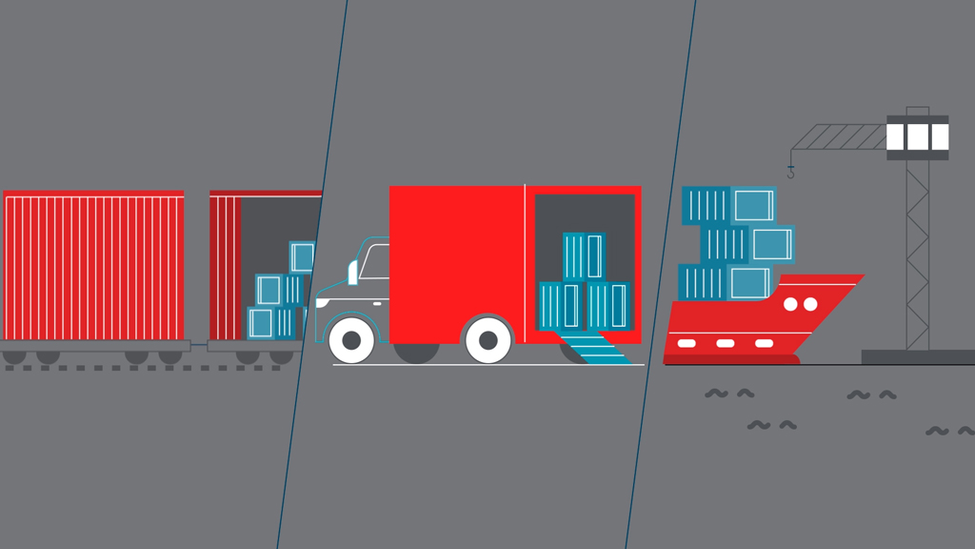
A ship full of crates drifts in water. One crate disappears from a crane.
(SPEECH)
SPEAKER: Your company's reputation, stolen in broad daylight.
(DESCRIPTION)
A truck drives on a road. The crate it carries vanishes.
(SPEECH)
Your profits, taken by sophisticated trickery.
(DESCRIPTION)
Crates in a stack disappear one by one.
(SPEECH)
The dream business you've built over 22 years, snatched with a mouse click. Cargo theft steals more than cargo. It steals business success.
(DESCRIPTION)
Text: Cargo theft costs U.S. businesses billions of dollars annually.
(SPEECH)
Estimates put annual cost to U.S. businesses in the billions. It's not just grab-and-go. Today's sophisticated thieves, many operating overseas in large organized crime rings, use strategic theft methods.
(DESCRIPTION)
Text: Strategic theft, identity theft, fictitious pickups, double-brokering scams.
(SPEECH)
These include identity theft, fictitious pickups and double-brokering scams, tactics based in
fraud and deceptive information.
(DESCRIPTION)
Investigators chat, exiting a truck. Text: Travelers Special Investigations Group.
(SPEECH)
That's why you want Travelers on your side. Members of Travelers Special Investigations Group are dedicated experts on cargo theft.
(DESCRIPTION)
Investigators hold walkie-talkies.
(SPEECH)
Recognized across the industry, they help to identify and mitigate the most complex and
advanced criminal techniques.
(DESCRIPTION)
Investigators examine the door of an empty crate.
(SPEECH)
These pros network with law enforcement and industry professionals across the globe,
(DESCRIPTION)
Text: Advanced support, smart strategies, consultations, best practices.
(SPEECH)
using smart strategies, consultations and best practices to help customers prevent theft before it happens. We provide insights on risks that can impact freight brokers offices, cargo at truck stops and beyond.
(DESCRIPTION)
Text: More than $130 million recovered since 2009.
(SPEECH)
And, of course, we help recover stolen loads for our clients too.
(DESCRIPTION)
Cargo crates reappear in a stack.
(SPEECH)
With Travelers on board, you can keep your cargo and your business where it needs to be.
(DESCRIPTION)
Text: Travelers. Learn how Travelers protects ocean and inland cargo. travelers dot com slash strategic theft. © 2025. The Travelers Indemnity Company. All rights reserved. Travelers and The Travelers Umbrella are registered trademarks of The Travelers Indemnity Company in the U.S. and other countries. This material does not amend, or otherwise affect, the provisions or coverages of any insurance policy or bond issued by Travelers. It is not a representation that coverage does or does not exist for any particular claim or loss under any such policy or bond.
Coverage depends on the facts and circumstances involved in the claim or loss, all applicable policy or bond provisions, and any applicable law. Availability of coverage referenced in this material can depend on underwriting qualifications and state regulations.
In the ever-evolving world of cargo theft, criminals have upped their game. 2024 saw a record-breaking 3,625 incidents of cargo theft in the U.S. and Canada, but these aren’t your typical break-ins.1 Sophisticated criminal organizations, often operating from overseas, now use deception to steal shipments in plain sight. This approach, known as strategic cargo theft, involves tricking shippers and brokers into unwittingly handing over their own goods. Unlike traditional cargo theft, which targets items at rest, strategic cargo theft relies on elaborate scams designed to make the thefts appear as routine shipment handoffs. The result? Lost loads, financial losses, supply chain disruptions and reputational damage for businesses.
As cargo theft crime becomes more sophisticated, companies must stay ahead with advanced prevention strategies. Understanding the latest tactics used by cargo thieves is the first step in mitigating risk.
The increasing danger of strategic cargo theft in supply chains
Cargo theft continues to surge, posing significant challenges to the supply chain. Between 2023 and 2024, the U.S. and Canada experienced a 27% uptick in reported cargo theft incidents,2 contributing to an estimated $3.5 billion to $10 billion in annual losses.3 However, it is not only the volume of thefts that is increasing – the sophistication of the techniques the criminals use is likewise increasing.
Strategic cargo theft grew nearly 1,500% from 2022 to 20244
Today’s cargo thieves are tech-savvy and moving beyond physically stealing unattended loads at truck stops, drop lots and rail yards.5 They now also use deception-based strategies that manipulate supply chain processes.
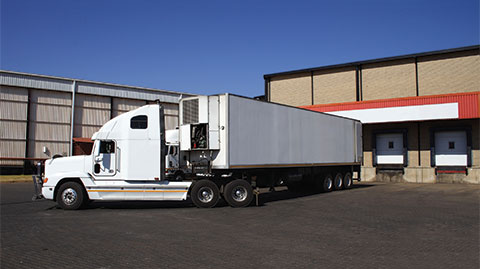
While most cargo thefts historically occurred at warehouses or distribution centers,6 strategic cargo thefts can happen at any vulnerable point in the supply chain. Criminals can operate under the guise of being a legitimate carrier in order to gain possession of cargo or steal another carrier’s identity to bid on shipments they later divert away from their intended destination. Criminals can also pose as a broker sending an unknowing legitimate carrier to go pick up and deliver the freight for them. They may also alter bills of lading to reflect a complete drop-off, allowing them to disappear with some of the load before anyone realizes something is wrong.
High-demand items, such as food and beverages, household products and electronics, are primary targets due to their easy resale potential.7 Pharmaceuticals, apparel, vehicles and accessories also attract thieves who seek a quick profit. When an opportunity presents itself and criminals take it, they leave companies throughout the supply chain with significant losses. As of 2024, the estimated value per theft hit was $202,364 – a nearly 8% increase from 2023 estimates.8 Beyond financial losses, strategic cargo theft can also damage a victim’s reputation, erode customer trust, disrupt supply chains and lead to time-consuming investigations.
Common types of strategic cargo theft
Strategic cargo thieves are like illusionists, using a range of deceptive tactics to steal shipments without detection. Understanding these schemes is key to helping prevent fraud and loss.
Double-brokering scams
Double-brokering scams are the most prevalent problem in the freight industry, affecting an estimated $500 million to $700 million in freight loss every year9. In one survey of freight industry professionals, 78% of respondents said double brokering is a widespread problem, while another 19% called it an occasional issue.9
This practice (which can also be a contractual violation) occurs when a carrier contracts a load under a specific motor carrier number but then hands it off to another party – either another carrier or an unapproved subcontractor – without the shipper’s or broker’s knowledge. While some legitimate freight carriers engage in this practice due to overbooking or lack of necessary credentials, it introduces security risks and complicates tracking. Often, it goes unnoticed unless a problem arises, such as damage, delays or an accident.10
However, double brokering is also a tool for criminals. Fraudsters can steal a legitimate carrier’s identity to bid on loads. A broker unknowingly assigns the load to the imposter carrier, who then re-brokers it to an unsuspecting legitimate carrier. The load is picked up and delivered as usual, but once the fraudster collects the payment, they disappear – leaving the legitimate carrier unpaid and the broker in a costly dispute.
Identity theft
Identity theft is another growing tactic in the criminal playbook for executing strategic cargo theft. In 2023, CargoNet saw a 438% uptick in identity fraud complaints from the previous year.11
One common tactic involves criminals fraudulently using another carrier’s USDOT number to secure loads under false pretenses. Once assigned a shipment, they divert it for theft before disappearing without a trace. Some criminals take this a step further by creating professional-looking websites, email addresses and documentation to impersonate an authentic business, making their scams even harder to detect.
A particularly damaging variant of this scheme involves criminals purchasing motor carrier (MC) numbers in bulk. By the time authorities recognize a misused MC number, thieves have stolen multiple shipments with it. Criminals also engage in load phishing, where they pose as carriers using email addresses that closely resemble legitimate companies to book loads under false pretenses. Once the fraudulent entity secures a shipment, a driver – who may or may not be complicit – picks up the load, which is then rerouted and stolen.12
Fictitious pickups
Fictitious pickups have surged in recent years, climbing from an average of 66 instances per year from 2012 to 2022 to a whopping 576 fictitious pickup events in 2023.13 To execute this scam, criminals first obtain inside information about scheduled pickups by using a variety of methods, including paying for information, planting members as warehouse employees or computer hacking. Armed with these details, they arrive at the pickup location ahead of schedule, often with vehicles bearing fraudulent logos. Warehouse staff, believing the shipment is being picked up as planned, release the cargo. By the time the real carrier arrives, the goods are gone and often unrecoverable.
6 ways to help protect against strategic cargo theft
While no system is foolproof, there are several steps businesses can take to help mitigate the risk of strategic cargo theft:
1. Know the latest cargo theft trends.
Stay current by:
- Reviewing theft reports from organizations like CargoNet.
- Attending cargo theft summits and industry conferences, like the Travelers/CargoNet Annual Summit.
- Listening to industry podcasts such as Freightwaves.
- Viewing industry media like the latest “What the Truck?!?” episodes.
- Joining organizations like the Transported Asset Protection Association (TAPA).
2. Vet carriers, brokers and other partners.
Thoroughly vet carriers, brokers and other logistics partners by:
- Checking references and credentials.
- Referring to the Federal Motor Carrier Safety Administration’s Safety and Fitness Electronic Records (SAFER)
- Checking online information consistency across multiple sources to detect fraudulent profiles.14
- Using TAPA (Transported Asset Protection Association) freight broker security standards.
3. Strengthen facilities and security protocols.
Enhancing security measures can reduce vulnerabilities. Here are a few ways to strengthen facilities and protocols:
- Avoid brokering loads with high-value, high-risk goods without thorough vetting.
- Invest in surveillance systems with alarms and high-definition cameras that cover the internal and external dock areas, along with the driver reception, and that capture the details of the trucks such as MC/DOT numbers, logos, trailer numbers and markings.
- Respond to all alerts from your surveillance systems.
- Keep detailed logs of driver and vehicle information and verify that truck numbers match the ones on the contract.
- Consider implementing vehicle and cargo tracking technology, immobilizers and advanced security seals.
- Conduct regular audits of supply chain participants to reduce gaps in shipment protection.
4. Train staff.
Employees play an important role in theft prevention. Effective strategies include:
- Background checks for warehouse workers, drivers and anyone else who has access to shipping information.
- Training staff to recognize red flags and respond to suspicious activity.
- Assigning security personnel to monitor countersurveillance.
- Establishing clear protocols for responding to potential theft.
5. Utilize tech and tracking solutions.
Enhanced shipment visibility makes theft more difficult. Consider:
- Installing covert AGPS tracking devices and sensors.
- Engaging real-time monitoring services.
- Implementing industry-specific tracking solutions, such as those available through the Travelers Transportation Management Innovation Network.
6. Develop a theft response plan.
If a theft occurs, fast action is critical. Ensure that a documented response plan is in place.
- Stipulate which jurisdiction to report a theft to (some states, like California, have dedicated cargo theft task forces).
- Establish relationships with security councils and organizations like TAPA for guidance. Include contact information.
- Streamline reporting procedures and contact information to avoid delays.
Travelers Insurance: The ultimate partner in fighting cargo theft
Strategic cargo theft is sophisticated and continually evolving, costing businesses billions in lost shipments and supply chain disruptions. While the threat continues to grow, steps can be taken to help reduce the risks. These actions include thoroughly vetting partners and employees, securing facilities, training staff and investing in tracking technology. Being proactive and remaining vigilant is key to keeping valuable shipments out of the wrong hands.
Travelers plays an active role in helping combat strategic cargo theft, both on behalf of insurance customers and as part of an industrywide effort. Our Special Investigations Group (SIG), is staffed with dedicated specialists on cargo theft. Since 2009, SIG has recovered more than $130 million in stolen goods. We also co-host the largest annual cargo theft summit with Verisk/CargoNet. In addition, the Travelers Innovation Network provides our customers a curated collection of solutions to help them keep their workers, worksites and businesses safe. With our knowledge and industry partnerships, Travelers is committed to helping businesses stay ahead of the aggressive tactics used by these sophisticated thieves.
Learn more about Travelers’ expertise in protecting cargo shipments along their journey. Ask your insurance agent about Travelers insurance for your business.
Sources:
1,2 https://www.cargonet.com/news-and-events/cargonet-in-the-media/2024-theft-trends/
3 https://www.justice.gov/archives/jm/criminal-resource-manual-1332-charging-theft-interstate-shipment-dollar-thresholds-local
4 https://losspreventionmedia.com/strategic-cargo-theft-what-it-is-how-it-started-and-what-you-can-do-to-stop-it/
5 https://www.fbi.gov/investigate/transnational-organized-crime/cargo-theft
6,7 travelers.com/resources/business-industries/transportation/cargo-theft-trends
8,11 https://www.cargonet.com/news-and-events/cargonet-in-the-media/2024-theft-trends/
9 https://www.freightwaves.com/wp-content/uploads/2023/09/20/TriumphPay-Double-Brokering-Dilemma-WP.pdf
10 https://www.ttnews.com/articles/double-brokering-increases
12 https://www.freightwaves.com/news/daily-infographic-load-phishing
13 https://www.cargonet.com/news-and-events/cargonet-in-the-media/2023-theft-trends/
14 https://www.fmcsa.dot.gov/mission/help/broker-and-carrier-fraud-and-identity-theft