Managing Construction Risks in the Expanding Renewable Energy Sector


Throughout the next two decades we’ll see a profound change in the energy sector, primarily due to unprecedented growth in renewable energy. This generational shift stems from the ongoing global transition from high-carbon to low-carbon energy sources. Governments, industries, organizations and individual households are increasingly investing in renewable energy. While renewable energy’s growth presents exciting opportunities for contractors, its buildout comes with risks – those that are common to most construction projects and others that are unique to renewable energy.
3 key drivers of renewable energy growth
Though renewable energy projects present nuanced construction risks, many feel that the benefits of increased renewable energy capacity are worth the effort of mitigating these risks. Here are three major drivers influencing the desire for increased renewable energy capacity:
1. Technological advances continue to increase demand for electricity
Advanced computing software, cryptocurrency mining and reshoring activities (such as semiconductor manufacturers and the EV network) all require increasing amounts of electricity. As these technologies advance, so does the amount of data we generate, further expanding demand for data center capacity and electricity. In fact, a 2024 report from the International Energy Agency states that data centers could double their energy usage by 2026.1
2. Sustainability concerns
Calls for improved environmental sustainability are coming from all directions – investors, citizens, employees and customers. With many states enacting environmental regulations or offering emission reduction incentives, organizations of all types are seeking to reduce their emissions, spurring greater demand for renewable energy sources.
3. Increasing desire for strategic energy independence
Energy independence has become a strategic imperative. Countries across the globe are focusing both legislation and incentive programs on building out renewable energy capacity. In fact, the U.S. has allocated $429 billion to energy-related areas through legislation such as the:
- Infrastructure Investment and Jobs Act (also known as the Bipartisan Infrastructure Law)
- CHIPS Act (Creating Helpful Incentives to Produce Semiconductors)
- Inflation Reduction Act
Size and scope of renewable energy capacity build-out.
Pace of capacity build-out rounded to the nearest whole gigawatt (North America):2
- Offshore wind capacity to reach 7 GW in North America by 2028.
- Onshore wind capacity to reach 255 GW in North America by 2028.
- Solar capacity to reach 419 GW in North America by 2028.
- Battery energy storage systems (BESS) to reach 23 GW in the U.S. by 2026.3
Pace of capacity build-out rounded to the nearest whole gigawatt (globally):4
- Offshore wind energy capacity to reach 1,479 GW by 2028.
- Onshore wind energy capacity to reach 884 GW by 2028.
- Solar energy capacity to reach 3,842 GW by 2028.
- BESS capacity to reach 157 GW by 2026.5
Common risks during renewable energy construction
For many, the transition to renewable energy means more work, more jobs and increased profit. To best capitalize on these opportunities, contractors take steps to mitigate the risks that come with meeting demand for the build-out of renewable energy.
Materials shortages
Threats to the renewable energy supply chain are well-documented and can exacerbate other risks. Materials shortages can delay resupply and slow construction timelines for contractors who've experienced a loss. Disrupted timelines can then amplify other risks, especially when factoring in tax implications related to missing planned deadlines.
Theft and vandalism
An unfortunate reality for contractors is that theft and vandalism continue to pose a challenge. Typical theft targets can include electrical wiring, equipment and tools. Effective mitigation strategies typically begin with evaluating the job site to identify potential theft targets like ATVs. These vehicles may be used to travel around the site and can be easy targets, particularly in rural areas. Appropriate controls, such as restricting site access, monitoring or surveillance, and proper inventory practices, can help reduce these exposures.
Damage to materials and equipment
Materials can sustain damage while waiting to be installed due to exposure to weather events and poor material handling. For instance, solar panels may get delivered to a site weeks or months before installation. In some cases, they’re left outside in boxes or pallets. Unfortunately, when these components are not properly stored, project teams are likely to find damaged and unusable materials.
In addition to panels, batteries may also be more susceptible to damage. Depending on their configuration or setup, battery components may short-circuit if they come into contact with other batteries, metal objects or conductive surfaces.
Here are some ways contractors can reduce risk to materials and equipment:
- Use just-in-time delivery to minimize the time equipment sits on-site and ensure that materials get packed in strong, rigid packaging while in transit.
- Upon arrival to the job site, always check the condition of materials packaging.
- Limit the number of times materials are handled prior to installation. The potential for damage increases each time a crew lifts something.
- When securing off-site storage, make sure the location is properly protected and address any contractual risk transfer requirements.
Finally, smart contractors establish clear site access routes during construction so that sensitive equipment or materials – especially if related to BESS installations – are protected from accidental contact with other equipment or vehicles. This not only helps prevent damage but also helps to ensure that first responders can access key areas in case of an emergency.
Improper testing and commissioning
Licensed and experienced contractors are required to properly test and commission each piece of equipment. Watch for combustible materials before, during and after installation. Failure during testing could lead to fire, but failure to test can lead to future fires. For instance, both electrical arcing and inverters that are wired incorrectly can lead to vegetation fires.
In the case of a BESS fire, it could even lead to thermal runaway – the swift, uncontrolled discharge of energy from a battery cell, which can cause battery fires or explosions. Thermal runaway can occur due to an internal short circuit resulting from mechanical, thermal or electrical damage to the battery before, during or after installation. If something goes wrong down the road, the cause may lead back to improper testing. A routine practice of robust testing can help to uncover defects and enable corrections before they cause damage.
Transportation risks
To mitigate the risks of damage or delays during transportation, contractors can check the condition of nearby access roads, including incline and decline grades. Contractors should also consider contingency plans for road closures, when and how to alter transportation routes during bad weather, and whether additional escorts are needed for oversized loads. If a third party is transporting materials, it’s good practice to ensure that proper contracts and risk transfer mechanisms are in place.
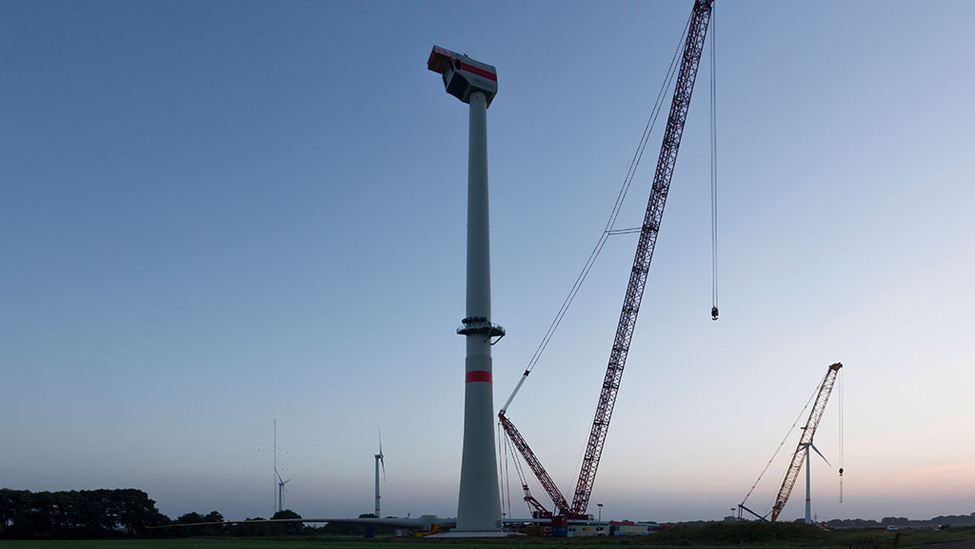
Due to their immense size, wind turbine blades require specialized transport, including escort vehicles. Additionally, many wind installations are built in rural areas with limited road access. When these two factors are combined, extra caution and planning is required to prevent damage while in transit and to protect construction timelines.
Improper rigging
(SPEECH)
[MUSIC PLAYING]
(DESCRIPTION)
Logo: Travelers. Text: Rigging Risks in Renewable Energy Builds. Building the Future of Energy. Hank Dutton, Senior Regional Risk Control Consultant, Certified Lift Director. Hank stands in front of wind turbines spinning on a grassy hillside.
(SPEECH)
HANK DUTTON: Preparing for tomorrow's renewable energies means preparing to put them in place.
(DESCRIPTION)
A row of turbines, a solar farm and a power station are pictured in side-by-side images.
(SPEECH)
Proper lift planning is key to an efficient and safe construction, installation and maintenance of wind farms, solar fields and battery energy storage system facilities. Here are four important topics that should be considered during the project planning phase.
(DESCRIPTION)
Text: 1 - Understanding engineering requirements. A row of turbine blades lying horizontally on the ground is pictured from above. Workers in safety vests walk around the cylindrical base of a turbine being constructed.
(SPEECH)
Start by reviewing the engineering requirements of the equipment you'll be putting into place, as well as the rigging needed for the installation.
(DESCRIPTION)
A worker tightens a bolt on a solar panel. Turbines towering over a wheat field spin under a dark gray sky.
(SPEECH)
The unique specs, standards and processes could impact every aspect of your project, such as the next consideration, ground conditions.
(DESCRIPTION)
Text: 2 - Inspect on-site ground conditions. A tractor plows a field next to a solar farm with rows of panels.
(SPEECH)
Often, wind turbine sites and solar fields are placed on land previously used for agricultural purposes.
(DESCRIPTION)
A man sifts soil through his hand.
(SPEECH)
This can impact ground stability.
(DESCRIPTION)
Text: Make sure the ground is level and strong. An animation depicts a level flattening bumpy ground.
(SPEECH)
The area where cranes will be used must be level and strong enough to resist the forces imposed by crane operations.
(DESCRIPTION)
Red arrows bounce as they point down to the ground. An animated dump truck tips its load to fill in a hole.
(SPEECH)
Factor in any ground improvements necessary to help prevent costly accidents and delays.
(DESCRIPTION)
Two workers inspect a turbine. A crane lifts a blade off a flatbed truck.
(SPEECH)
Monitor ground conditions for settlement and reinspect after extreme weather, such as thunderstorms.
(DESCRIPTION)
Text: 3 - Plan for the unpredictability of extreme weather. A turbine with a broken and frayed blade sways in the wind.
(SPEECH)
Speaking of weather, it's another important consideration. Extreme weather can be especially dangerous at a wind farm installation.
(DESCRIPTION)
Blowing snow blasts a row of turbines. A broken one stands still while the others spin.
(SPEECH)
High-wind events and thunderstorms can damage equipment and endanger employees.
(DESCRIPTION)
Text: Weather monitoring and on-site procedures. Doppler radar shows rain moving into an area on a map. A worker standing under a turbine works on a tablet.
(SPEECH)
Include weather-monitoring equipment, as well as on-site procedures, as part of your plan.
(DESCRIPTION)
A crane lifts a piece of a turbine.
(SPEECH)
Of course, rigging is ultimately performed by people.
(DESCRIPTION)
Text: 4 - Hire the right people to get the job done right. An illustrated worker wears a yellow helmet and safety vest along with safety glasses.
(SPEECH)
Having the correct personnel with proper training and qualifications can help prevent equipment damage and serious injuries.
(DESCRIPTION)
Text: Qualified, Experienced, Certified. The illustrated worker stands on a hill as a crane lifts a blade nearby.
(SPEECH)
Workers should be trained to use the specialized rigging techniques and equipment necessary to lift long, heavy turbine blades and tower sections.
(DESCRIPTION)
Text: Focus on training and qualifications. A woman types on a laptop while standing near a turbine.
(SPEECH)
Also, employees should be familiar with the rigging manufacturer's instructions.
(DESCRIPTION)
Workers walk around a crane cab carrying straps.
(SPEECH)
Verify the qualifications of on-site personnel, including riggers, crane operators, signal persons, lift directors, site supervisors and safety staff.
(DESCRIPTION)
Text: Travelers understands the importance of rigging. The umbrella logo flips and we return to Hank.
(SPEECH)
Travelers understands the risks that renewable energy companies face. That's why we offer solutions supporting the build-out of new capacity and ongoing operations, such as giving our customers access to complimentary crane safety training, including a four-and-a-half-day in-person course based on national certification requirements and a lift planning fundamentals class. It all adds up to more successful projects for companies and more promise for renewable energy.
[MUSIC PLAYING]
(DESCRIPTION)
Logo: Travelers. Talk to your independent agent or visit travelers dot com slash renewable construction. © 2025, The Travelers Indemnity Company. All rights reserved. Travelers and The Travelers Umbrella are registered trademarks of The Travelers Indemnity Company in the U.S. and other countries. This material does not amend, or otherwise affect, the provisions or coverages of any insurance policy or bond issued by Travelers. It is not a representation that coverage does or does not exist for any particular claim or loss under any such policy or bond. Coverage depends on the facts and circumstances involved in the claim or loss, all applicable policy or bond provisions, and any applicable law. Availability of coverage referenced in this material can depend on underwriting qualifications and state regulations.
Wind tends to complicate the crane work required to erect rooftop solar installations, wind turbines and BESS projects. This makes correct crane placement and rigging – and appropriate tie-downs and securements – particularly important in preventing crane-related accidents that can injure workers and damage equipment and materials.
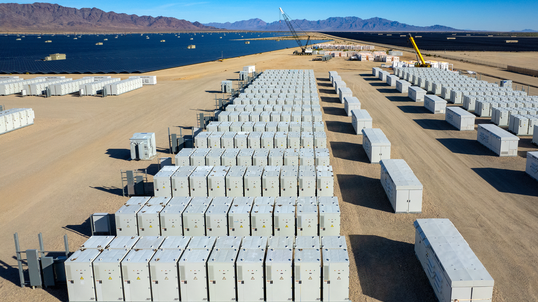
Wind power installations are purposely built in places with steady (and sometimes strong) winds. Ensure contractors properly calibrate crane anemometers to monitor weather conditions, including extreme wind. Specialized equipment for BESS installations also requires proper material handling. Large BESS containers must be lifted onto concrete pads, and if a BESS container is dropped, the consequences can be substantial.
Consider the following in your crane or lift safety pre-planning:
- Crane or lift selection
- Work crew qualifications
- Inspections
- Equipment placement
- Ground conditions
Keep in mind that these are high-value materials with nuanced sensitivities. Asset managers must make sure their contractors have insurance and that appropriate contractual risk transfer agreements are in place.
Environment, weather and natural disasters
When building renewable energy installations, consideration of local environmental factors is crucial to risk mitigation planning. For instance, without stormwater management that provides flood control and sound drainage design for local topography, contractors risk structural damage from bad weather or natural disasters during construction.
Additionally, components, materials and equipment can sustain weather-related damage on-site or while in transit. This is especially true during construction, when the lack of natural ground cover can quickly yield muddy conditions and a higher potential for erosion and rutting. When this occurs, heavy equipment like a forklift is more likely to hit and damage materials.
Uninstalled materials and equipment may also be exposed to lightning and fire-related damage. Depending on the season and location, icing or snow can also lead to collapse, causing project delays. Contractors can take precautionary measures by vetting the geographic characteristics of the laydown yard and determining whether it’s in a flood zone.
Strategic scheduling is also critical to avoid weather-related issues. Best practices include keeping seasonal and local weather patterns in mind with special attention to potential weather events during construction. For example, if hail is possible, use proper storage methods to guard against damage.
After considering all possibilities related to weather, contractors can make contingency plans for each situation. These include creating emergency action plans and maintaining access roads and driveways. Doing so helps emergency responders access the site, directs the flow of equipment and vehicle traffic, and reduces the potential for property damage and injury.
Special considerations for offshore wind
Constructing offshore wind power installations comes with a unique set of risk factors. These include the inability of vessels to come into port or reach the project location during inclement weather.
Offshore wind installations pose some challenges due to Jones Act regulations. The act requires U.S.-flagged, built, crewed or owned vessels to transport merchandise, including wind turbine blades, between two U.S. points. These “points” include U.S. ports, offshore wind turbines and installation vessels affixed to the seafloor.
Margin pressures are also harder to predict for offshore wind power installations due to ever-changing value chains. Renting the vessels required to build offshore wind installations can reach $200,000 to $300,000 per day, which makes this cost the largest single contributor to inflationary factors and a large contributor to additional claim values. Cable defects have also been known to cause major bottlenecks that stall construction timelines.
How to help protect renewable energy projects
While knowing the common risks of renewable energy construction and planning how to mitigate them is vital, it’s also important to protect these projects with builders’ risk insurance coverage. This type of insurance can help cover the repair of certain property and other costs:
- The building that's undergoing construction or renovation.
- Materials used, at the project site and during transport, in building the structure.
- Equipment waiting to be installed, currently being installed or already installed in the building during construction.
- Overhead expenses, reasonable labor costs and expected profit from the project.
- Additional project costs, such as fees for building permits.
For an extra layer of protection, contractors should consider renewable and alternative energy insurance, which can help safeguard equipment and power installation investments. Talk to an insurance agent today to determine the appropriate coverage for your building projects.
Sources:
1 https://iea.blob.core.windows.net/assets/6b2fd954-2017-408e-bf08-952fdd62118a/Electricity2024-Analysisandforecastto2026.pdf
2, 4 https://www.iea.org/data-and-statistics/data-tools/renewable-energy-progress-tracker
3, 5 https://www.iea.org/articles/how-rapidly-will-the-global-electricity-storage-market-grow-by-2026